
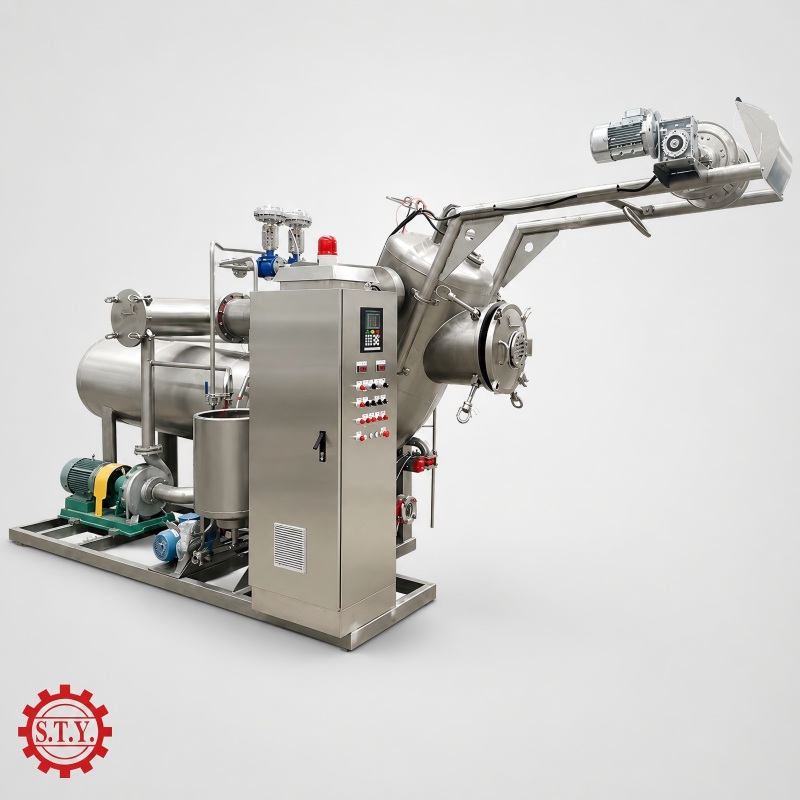
TY-JL636S middle sample fabric dyeing machine helps reduce the scale-up gap from lab sample to bulk dyeing with production-like circulation and process control.
Model :
TY-JL636SPayment :
T/T;LCProduct Origin :
ChinaShipping Port :
Shanghai Port, ChinaHS Code :
8451400000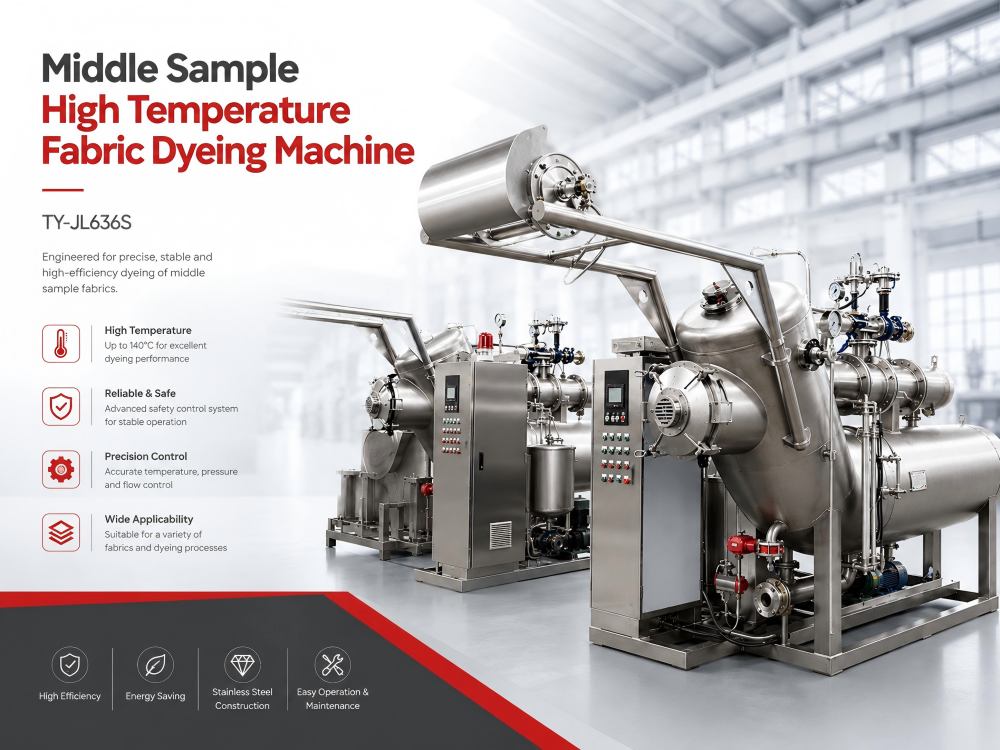
The TY-JL636S middle sample high temperature fabric dyeing machine is designed for pre-bulk fabric dyeing verification before large batch production. It supports dyehouses that need a more reliable fabric dyeing machine application process before entering bulk dyeing. It helps reduce the scale-up gap between laboratory sample dyeing and bulk production dyeing by providing a dyeing condition closer to actual production, including fabric circulation, overflow dyeing principle, heating curve and process operation.
This machine is not simply a smaller dyeing machine. It is a practical intermediate step between lab sample approval and full-size production, especially for dyehouses that want to improve first-time-right dyeing rate, reduce re-dyeing risk and control water, steam, chemical and delivery losses.
In many dyehouses, the laboratory sample is approved first, and then the recipe is directly enlarged for bulk production. However, a laboratory beaker cannot fully reproduce the working condition of a production fabric dyeing machine. Fabric loading, liquor ratio, nozzle action, fabric movement, heating rate, cooling rate and operator execution can all affect the final shade.
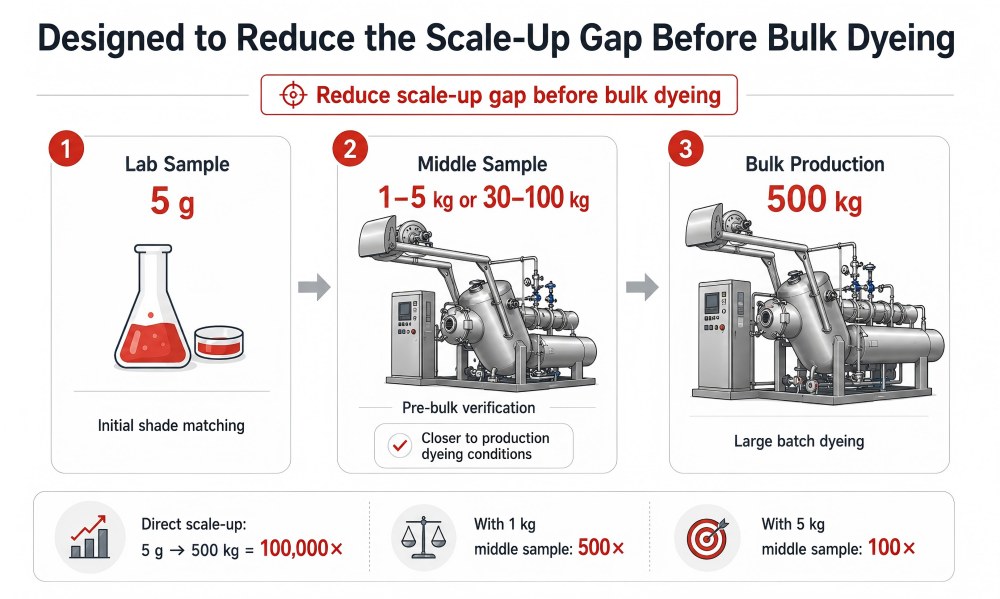
For example, if a lab sample uses only 5 g of fabric and the production batch is 500 kg, the recipe is enlarged by 100,000 times. Any small difference in operation or process condition may become visible in bulk dyeing. By using a middle sample machine before full production, the dyehouse can verify the recipe under a more realistic condition and reduce the risk of shade deviation.
For a dyehouse, improving the first-time-right dyeing rate is one of the most practical ways to reduce water consumption, steam usage, chemical waste, re-dyeing cost and delivery pressure. A failed bulk batch does not only waste dyestuff and auxiliaries. It also affects delivery schedule, fabric quality, machine availability and customer confidence.
The purpose of middle sample dyeing is to reduce this production risk before the dyehouse enters a large batch. Instead of jumping directly from a few grams of laboratory fabric to hundreds of kilograms of production fabric, the dyehouse can first run a middle sample batch to check shade, recipe stability, fabric running condition and process repeatability.
If a 1 kg middle sample is used before a 500 kg production batch, the scale-up ratio is reduced to 500 times. If a 5 kg middle sample is used, the ratio is reduced to 100 times. Compared with direct scale-up from 5 g lab dyeing, this helps reduce recipe distortion and makes the production result easier to control.
A middle sample fabric dyeing machine should not be judged only by its capacity. For reliable pre-bulk testing, the more important question is whether the machine can reproduce the dyeing condition of the production machine as closely as possible.
The TY-JL636S is designed based on the working principle of high temperature overflow fabric dyeing. For buyers comparing middle sample testing with full-size production equipment, it can be reviewed together with a bulk high temperature fabric dyeing machine. Its fabric circulation, lifting reel action, nozzle effect, heating and cooling control are intended to help the dyehouse test fabric behavior and recipe performance under conditions closer to bulk dyeing.
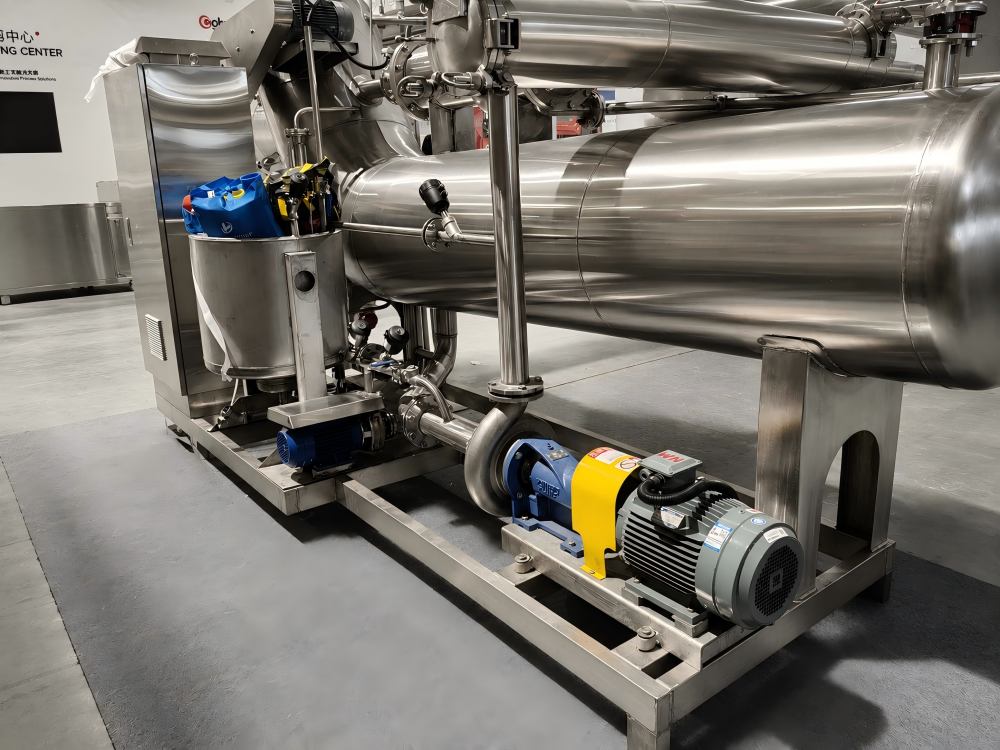
For buyers who are also comparing fabric movement, rope circulation and lifting structure, this product page can be read together with our fabric movement and lifting wheel structure page.
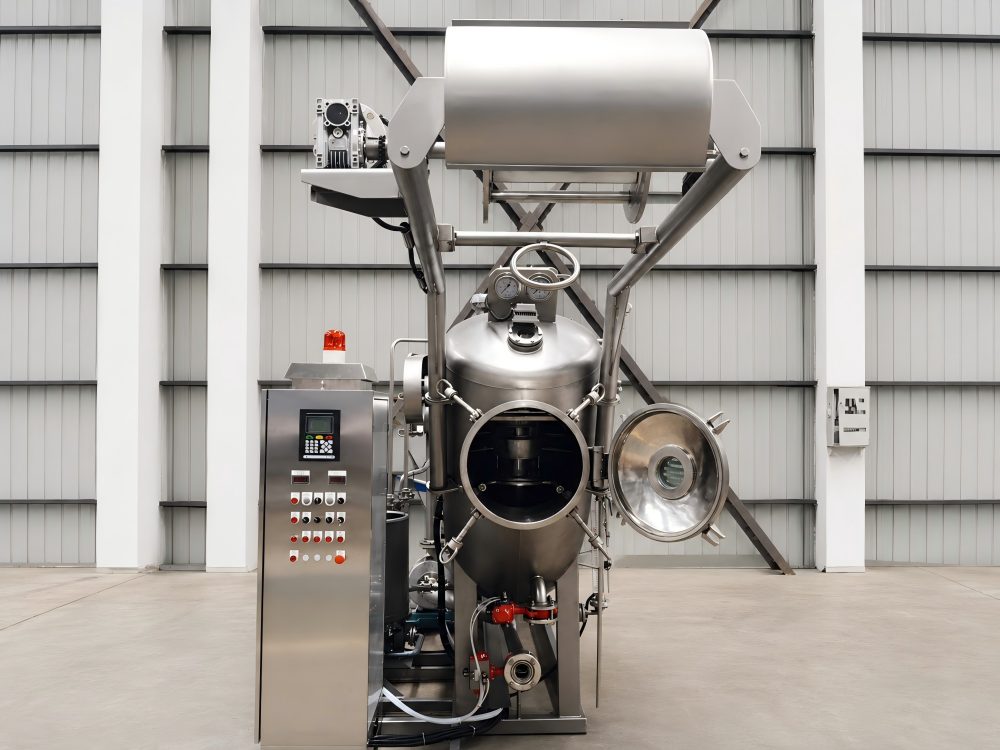
In middle sample dyeing, liquor ratio is a key factor that affects dye concentration, chemical distribution, heating efficiency and fabric-liquor exchange. If the liquor ratio of the middle sample machine is very different from the bulk dyeing machine, the sample result may still be distorted during production scale-up.
The goal is not simply to pursue the lowest liquor ratio number. The more important point is to make the middle sample dyeing condition close to the buyer's actual bulk dyeing process. Actual liquor ratio should be confirmed according to fabric type, GSM, loading quantity, fabric width, machine structure and production process requirement.
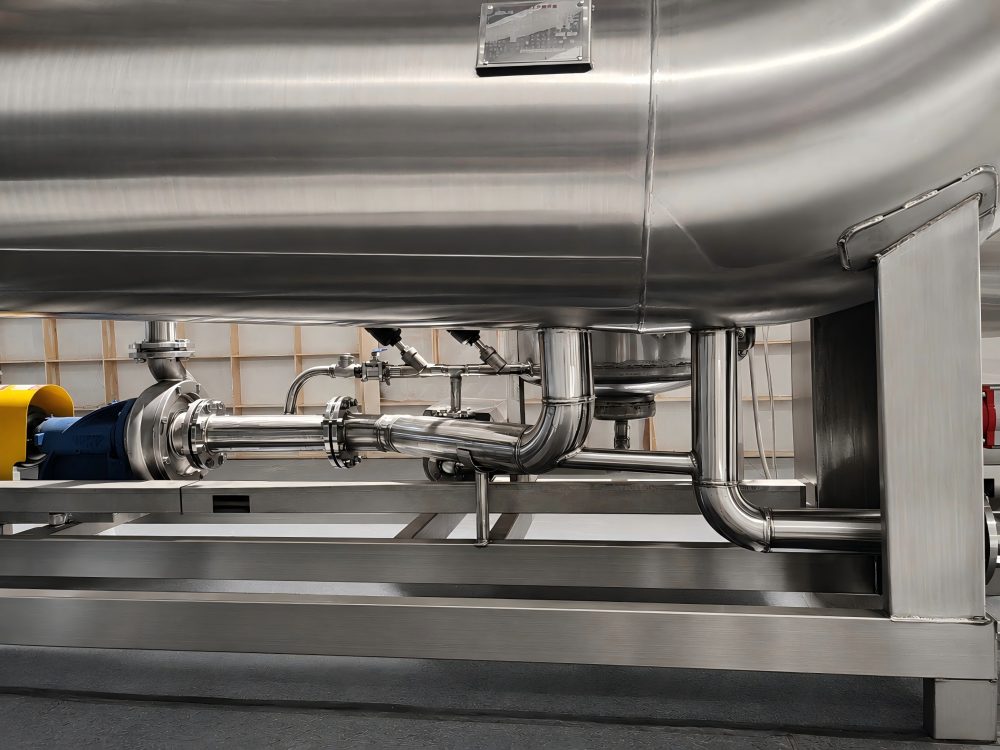
Before recommending the TY-JL636S-30, TY-JL636S-50 or TY-JL636S-100 model, we suggest checking the buyer's existing bulk dyeing machine structure, target batch size and current liquor ratio range. This helps reduce the risk of choosing a sample machine that cannot properly support production scale-up.
| Dyeing Stage | Typical Fabric Quantity | Main Purpose | Main Limitation |
|---|---|---|---|
| Laboratory Sample Dyeing | About 5 g | Initial shade matching and recipe development | Cannot fully simulate production dyeing condition |
| Middle Sample Dyeing | 1 kg, 5 kg, 30 kg, 50 kg or 100 kg depending on process | Pre-bulk verification before large batch production | Requires structure and liquor ratio close to bulk dyeing condition |
| Bulk Production Dyeing | Hundreds of kilograms per batch | Mass production after recipe confirmation | Any deviation may cause high rework cost and delivery delay |
The TY-JL636S middle sample high temperature fabric dyeing machine is mainly suitable for pre-bulk verification and sample dyeing of knitted fabrics, polyester fabrics, elastic fabrics, viscose blends, nylon blends and selected medium-weight textile fabrics that can run under overflow dyeing conditions.
It can be used for shade confirmation, process curve testing, new fabric development, customer sample approval and small-lot trial production before entering large batch dyeing. For factories that are still comparing fabric type, GSM range and dyeing requirement, our fabric dyeing applications by fabric type page can help clarify the machine selection direction.
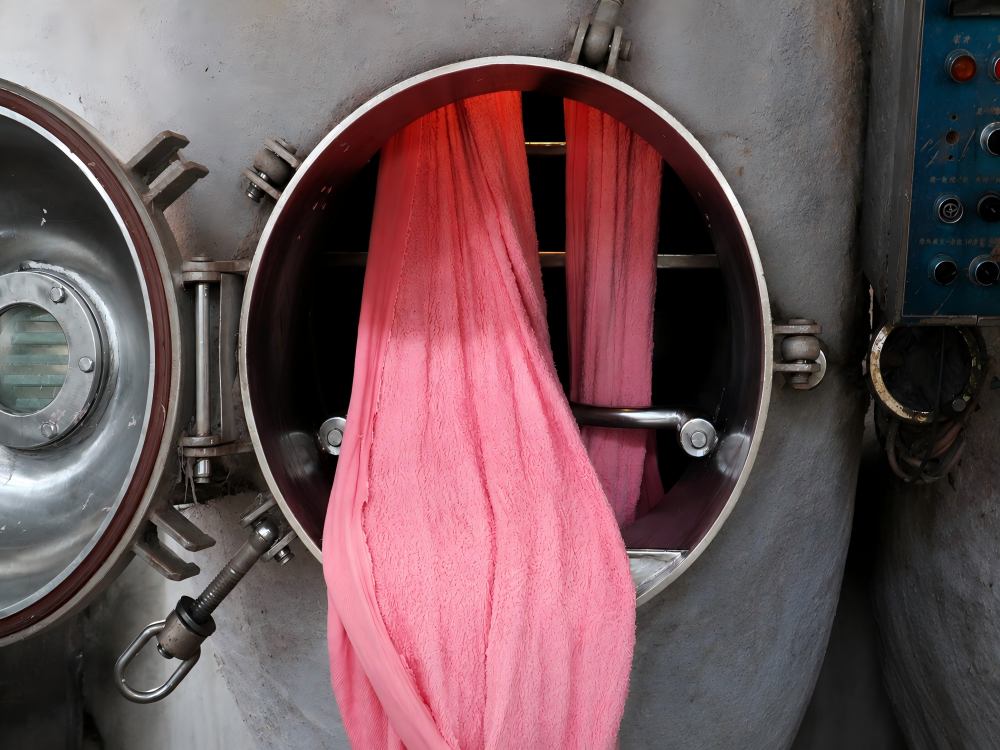
For very delicate fabrics, very heavy fabrics, high-elongation fabrics, special loop fabrics or fabrics with strict surface requirements, fabric sample and production process details should be checked before confirming the final machine configuration.
TY-JL636S is available in 30 kg, 50 kg and 100 kg models. The suitable capacity should be selected according to fabric type, GSM, loading length, target liquor ratio, sample verification purpose, workshop space and the buyer's normal bulk production batch size.
The following table is only a practical reference for preliminary selection. Final model recommendation should be confirmed after checking the actual dyeing process.
| Model | Capacity | Preliminary Selection Logic |
|---|---|---|
| TY-JL636S-30 | 30 kg | Can be considered when the buyer needs a smaller middle sample batch for pre-bulk recipe verification, process checking or limited sample production before larger batch dyeing. |
| TY-JL636S-50 | 50 kg | Can be considered when the buyer needs a larger middle sample quantity than 30 kg to make the test condition more representative before bulk production. |
| TY-JL636S-100 | 100 kg | Can be considered when the buyer needs a larger pre-production test batch or wants the middle sample result to be closer to actual production scale, subject to fabric type and process confirmation. |
Capacity alone should not decide the model. For fabrics with high elongation risk, heavy GSM, strict surface requirements or special dyeing process, fabric sample and production details should be reviewed before final selection.
The following model data helps buyers compare capacity, installed power and workshop space requirement before selecting a suitable middle sample fabric dyeing machine. Final configuration should be confirmed according to fabric type, loading condition and process requirement.
| Model | Capacity | No. of Tubes | Power | Dimension L × W × H mm |
|---|---|---|---|---|
| TY-JL636S-30 | 30 kg | 1 | 7.5 kW | 5800 × 1700 × 3080 |
| TY-JL636S-50 | 50 kg | 1 | 11.25 kW | 6200 × 1700 × 3080 |
| TY-JL636S-100 | 100 kg | 1 | 11.25 kW | 6590 × 1700 × 3080 |
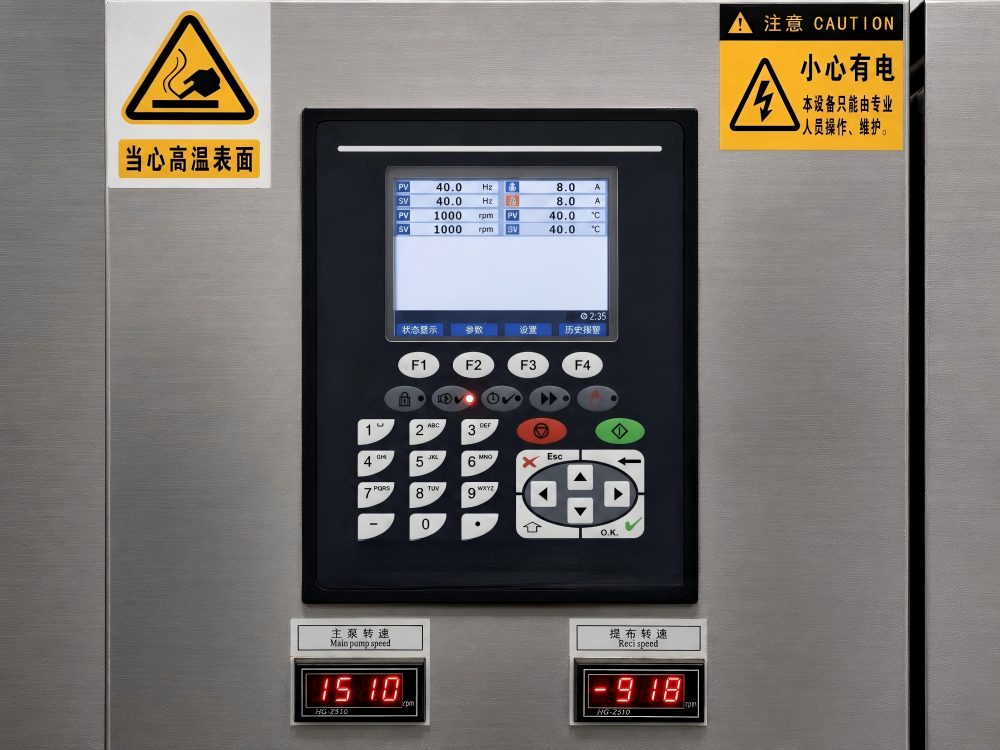
The following technical data helps buyers evaluate whether the TY-JL636S can match their current dyeing process, workshop space and sample production requirement. Final configuration can be discussed according to fabric and process conditions.
| Model | TY-JL636S |
| Working Pressure | 0.4 MPa |
| Maximum Design Temperature | 152℃ |
| Temperature Rise Rate | 20–140℃, approx. 35 minutes |
| Temperature Drop Rate | 140–70℃, approx. 30 minutes |
| Cloth Running Speed | 0–450 m/min |
The TY-JL636S series can be configured according to the buyer's process requirement, automation level and budget. The purpose of optional configuration is not only to add functions, but to help the dyehouse improve process repeatability and operation control.
The TY-JL636S is especially useful when the dyehouse often faces shade deviation between laboratory samples and bulk production, frequent re-dyeing, high customer requirements for shade consistency, or difficulty controlling low-liquor-ratio production conditions.
It is also suitable for factories developing new fabrics, testing new dyeing recipes, confirming process curves, checking fabric running stability and preparing the first production batch before mass production.
A laboratory sample mainly confirms the initial shade and recipe direction. However, the working condition of a lab beaker is different from a production fabric dyeing machine. A middle sample machine helps verify the recipe under conditions closer to bulk dyeing, including fabric circulation, liquor ratio, nozzle action, heating curve and process execution.
Middle sample dyeing reduces the scale-up gap between laboratory dyeing and bulk production. By testing a larger fabric quantity in a machine structure closer to production dyeing, the dyehouse can identify recipe deviation, process instability or fabric running problems before entering mass production.
Liquor ratio affects dye concentration, chemical distribution, heating efficiency and fabric-liquor exchange. If the middle sample machine uses a liquor ratio very different from the bulk machine, the sample result may not accurately reflect production behavior. The actual liquor ratio should be confirmed according to fabric type, loading condition and bulk dyeing process.
A laboratory sample machine is mainly used for initial shade matching with very small fabric quantities. A middle sample dyeing machine is used for pre-bulk verification and should be closer to the production dyeing machine in structure, fabric movement, liquor ratio and process control.
The model should be selected according to normal bulk production batch size, fabric type, GSM, fabric width, sample verification purpose and available workshop space. Capacity is only one reference. Final selection should be confirmed according to actual fabric and dyeing process conditions.
No. The main role of the TY-JL636S is pre-bulk verification, sample dyeing and small-lot trial production. It helps the dyehouse reduce risk before bulk production, but it is not designed to replace a full-size production dyeing machine for large batch output.
If you are comparing middle sample dyeing with bulk fabric dyeing or fabric-type-based machine selection, the following pages may help you evaluate the process more clearly.
Share your fabric type, GSM, fabric width, target batch capacity, current bulk dyeing machine structure, required dyeing temperature and target liquor ratio. Our engineer will help check whether TY-JL636S-30, TY-JL636S-50 or TY-JL636S-100 is more suitable for your process.
You can also request a running video for similar fabric to better understand the fabric circulation and machine operation before quotation.
Request Model Recommendation
