
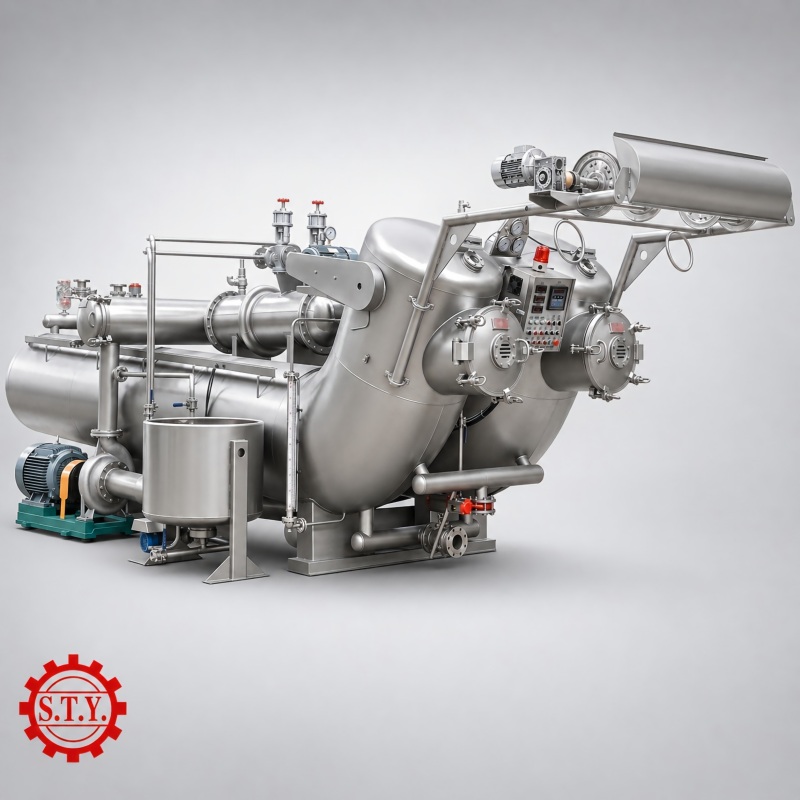
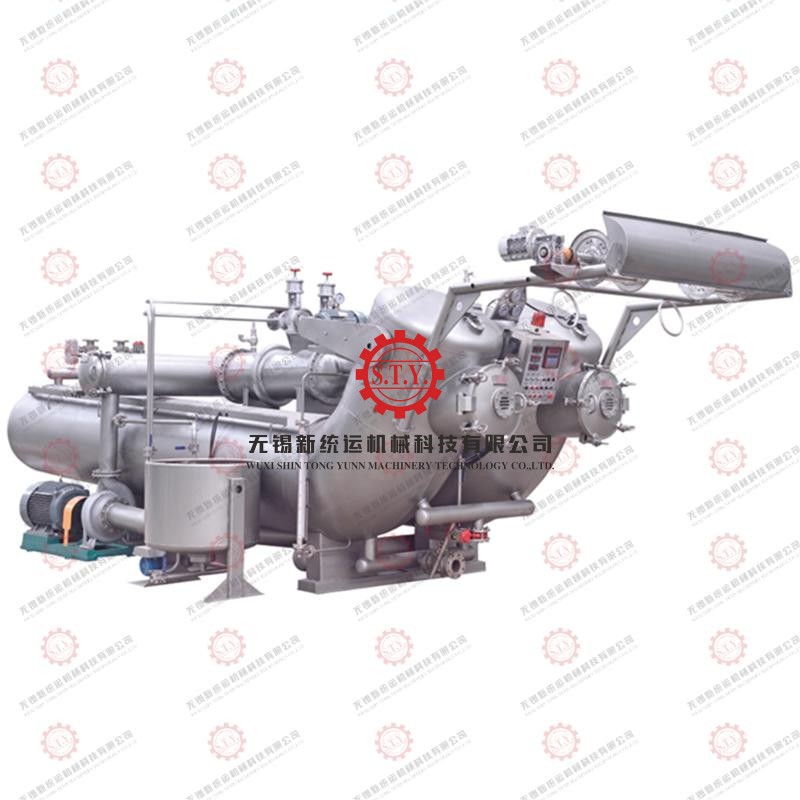
The TY-JL636 top-running overflow fabric dyeing machine is designed for knitted, elastic, delicate and selected home textile fabrics. Its gentle top-running circulation helps reduce fabric tension and surface friction, while supporting a wide fabric range of approximately 50–2000 GSM. The machine operates with a liquor ratio starting from approximately 1:6–7, a maximum design temperature of 140℃ and fabric speed up to 450 m/min.
Model :
TY-JL636Payment :
LC;T/TProduct Origin :
ChinaShipping Port :
Shanghai Port, ChinaHS Code :
8451400000The TY-JL636 top-running overflow fabric dyeing machine is designed for knitted, elastic, delicate and selected home textile fabrics where gentle fabric movement, soft hand feel and wide fabric adaptability are important.
Its top-running structure combines mechanical fabric lifting with controlled liquor circulation, helping reduce unnecessary fabric tension and surface friction during repeated circulation.
With an applicable fabric range of approximately 50–2000 GSM, liquor ratio starting from approximately 1:6–7, maximum design temperature of 140℃ and fabric speed up to 450 m/min, the TY-JL636 is suitable for dyehouses processing a relatively wide range of knitted and specialty fabrics.
TY-JL636 is mainly recommended when the fabric requires relatively gentle handling during dyeing or when the dyehouse needs one machine structure to cover a wider GSM range.
| Primary Applications | Knitted synthetic fabric, elastic knitted fabric, delicate fabric, velvet and brushed home textile fabric |
| Other Suitable Applications | Selected cotton knit, nylon knit, blended fabric, cleaning cloth, towel fabric and other fabrics after application confirmation |
| Fabric Weight Range | Approximately 50–2000 GSM |
| Selection Priority | Gentle fabric movement, soft hand feel, surface protection and wide fabric adaptability |
Final machine selection should be confirmed according to fabric composition, GSM, width, elasticity, surface sensitivity, batch loading and dyeing process.
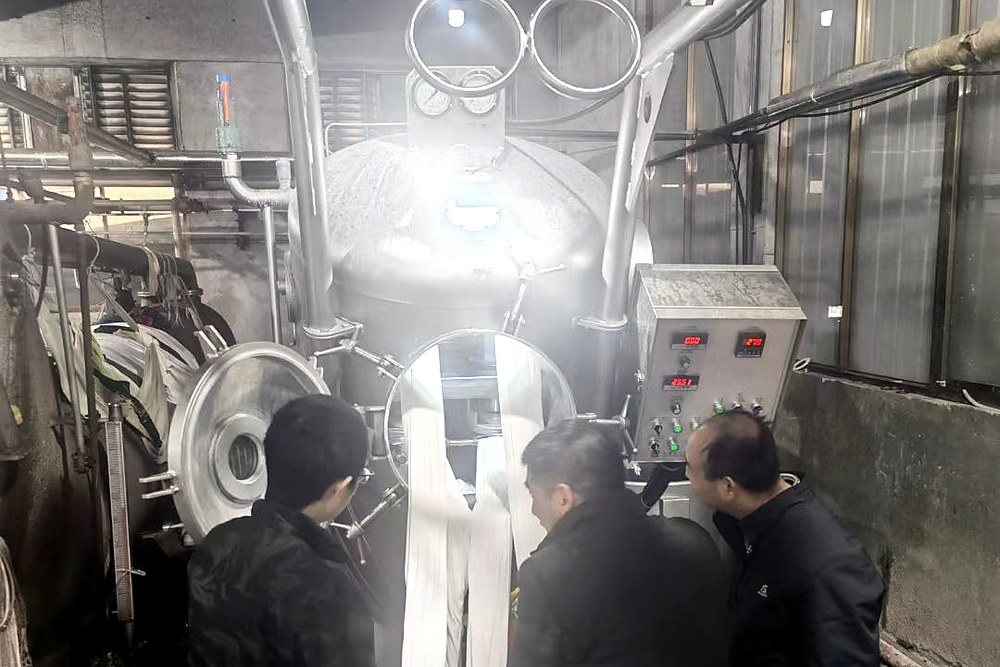
Actual fabric trial on the TY-JL636 top-running overflow dyeing machine.
During operation, the fabric is sewn into a continuous rope and repeatedly circulates through the dyeing chamber. The upper lifting system assists fabric movement, while controlled liquor circulation supports fabric transport and continuous liquor-fabric exchange.
This arrangement is particularly useful for fabrics that are sensitive to excessive pulling, stretching or surface friction. The fabric does not depend entirely on strong liquor pressure for circulation, helping provide a gentler running condition.
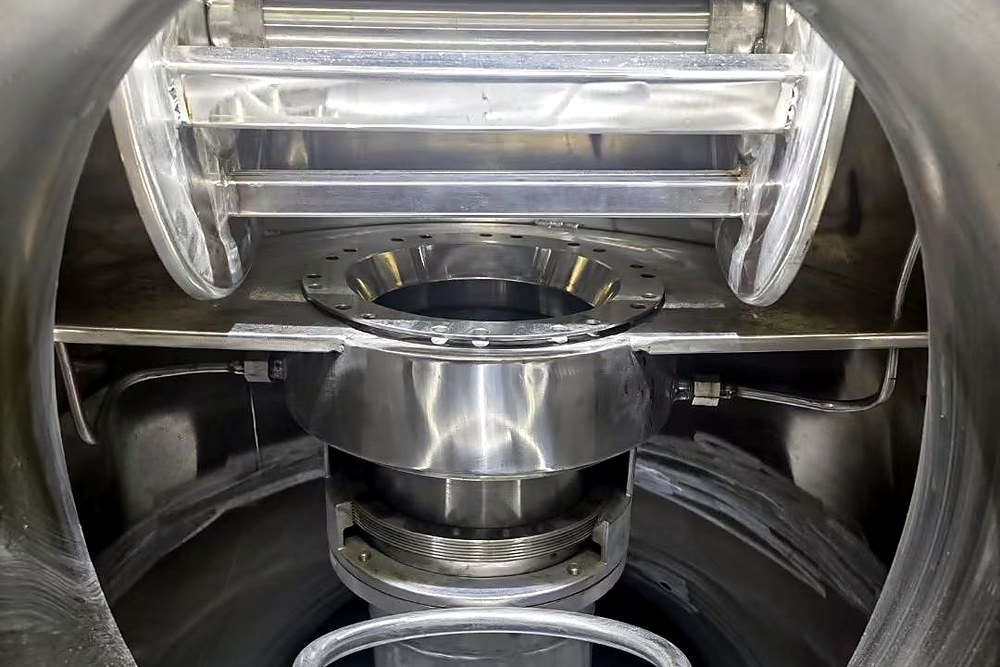
Inside view of the TY-JL636 dyeing chamber showing the internal fabric circulation structure.
| Dyeing Vessel | Provides the main fabric storage and dyeing space during circulation. |
| Upper Lifting System | Assists fabric movement and reduces dependence on high liquor pressure for fabric transport. |
| Overflow Liquor System | Provides controlled liquor flow to support fabric movement and dye liquor exchange. |
| Main Circulation Pump | Maintains continuous dye liquor circulation through the machine. |
| Heat Exchanger | Controls heating and cooling according to the dyeing process curve. |
| Dyestuff & Chemical System | Used for preparation and controlled addition of dyestuff and process chemicals. |
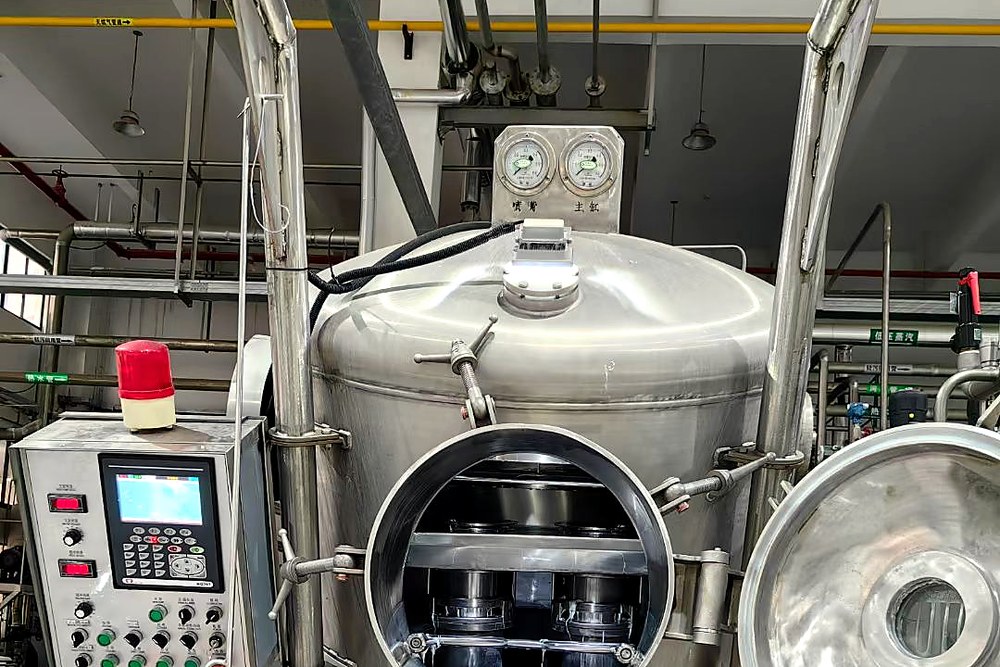
Actual TY-JL636 machine with the dyeing chamber opened for internal structure inspection.
| Machine Type | Top-running L-type overflow fabric dyeing machine |
| Liquor Ratio | Approximately 1:6–7, depending on fabric and loading condition |
| Applicable Fabric Weight | Approximately 50–2000 GSM |
| Maximum Design Temperature | 140℃ |
| Working Pressure | 0.4 MPa |
| Fabric Running Speed | 0–450 m/min |
| Heating Rate | 20℃ to 140℃ in approximately 35 minutes* |
| Cooling Rate | 140℃ to 70℃ in approximately 30 minutes* |
*Heating and cooling performance depends on steam pressure, cooling water condition, machine loading and actual production environment.
| Model | TY-JL636-250 | TY-JL636-500 | TY-JL636-1000 |
|---|---|---|---|
| Nominal Capacity | 250 kg | 500 kg | 1000 kg |
| Number of Tubes | 1 | 2 | 4 |
| Installed Power | 19.45 kW | 37.35 kW | 67.5 kW |
| Dimensions (L×W×H) | 8090×1700×3080 mm | 8090×3100×3080 mm | 8090×6050×3080 mm |
Actual loading capacity depends on fabric GSM, width, bulk density, fabric structure and process conditions. For certain fabrics, loading per tube can approach approximately 300 kg. Final capacity should be confirmed according to the customer's actual fabric.
Different fabric structures require different dyeing machine designs. TY-JL636 should therefore be selected according to the actual fabric and process requirement rather than simply by batch capacity.
| Machine | Recommended When |
|---|---|
| TY-JL636 Top-Running Overflow |
Recommended when a wider fabric range, gentle top-running circulation, soft hand feel and protection against excessive tension or surface friction are important. |
| TY-SF Internal Lifting Wheel |
Consider TY-SF mainly for knitted and elastic fabric around 50–350 GSM when lower liquor ratio and low-tension fabric handling have higher priority. |
| TY-JL631 Down-Running Long-Tube |
Consider TY-JL631 mainly for woven fabric where a long-tube down-running structure and higher fabric running speed are more suitable for production. |
For a more detailed comparison, see our Fabric Dyeing Machine Application & Selection Guide .
After dyeing, knitted fabric may continue through downstream processes such as de-twisting, slitting, scouring or washing, squeezing, compacting and inspection, depending on the fabric structure and required finishing result.
For tubular knitted fabric that needs to be opened into full width after dyeing, an after-dyeing de-twisting, slitting, scouring and squeezing system can combine several downstream processes before further finishing.
For knitted fabrics requiring improved dimensional stability and surface appearance after dyeing, open-width knitted fabric compacting equipment may be included as part of the downstream finishing process.
The TY-JL636 can be configured according to production requirements, automation level and factory utilities. Available options may include:
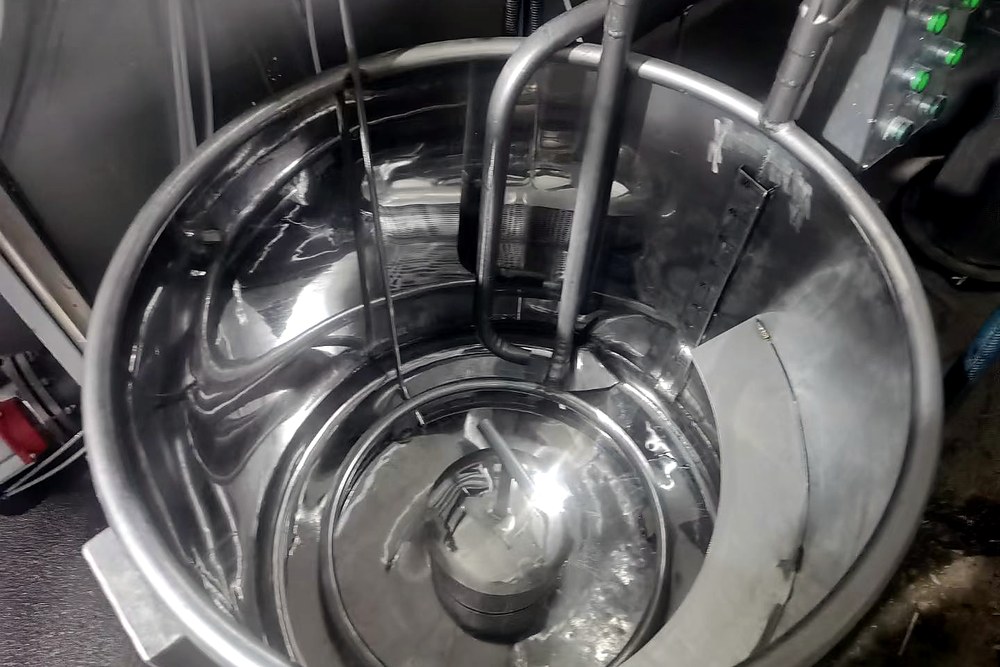
Internal view of the dyestuff tank used for dye and chemical preparation before addition to the dyeing machine.
Fabric circulation and machine operating conditions can be checked according to the actual production requirement. The following photo shows an actual fabric trial and machine inspection on the TY-JL636.
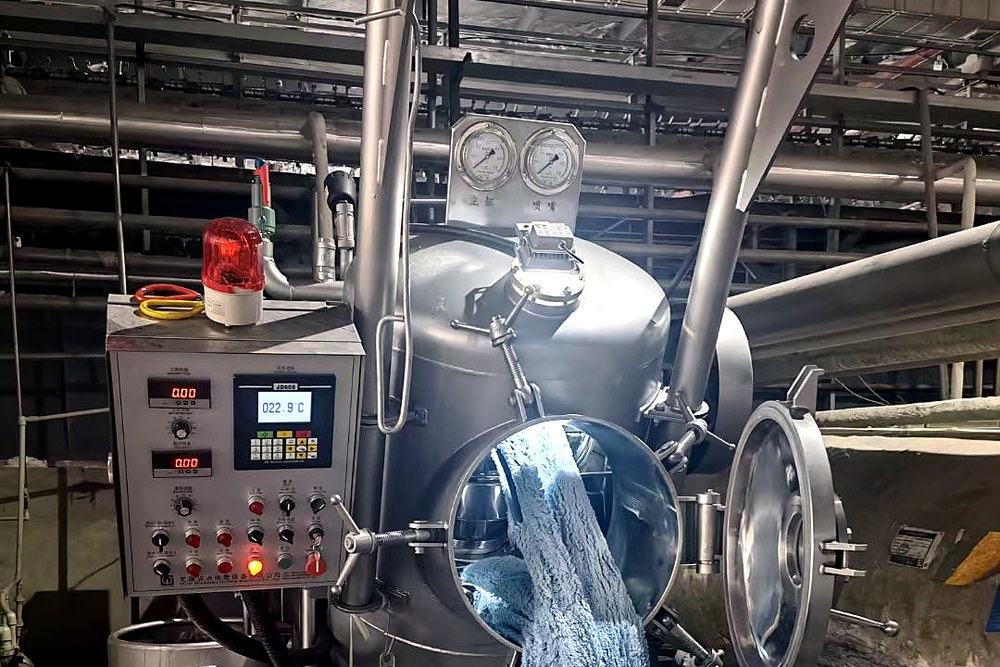
Actual fabric trial and operating-condition inspection on the TY-JL636.
To determine whether TY-JL636 is suitable and select the correct machine size, please provide:
TY-JL636 is mainly intended for knitted, elastic, delicate and selected home textile fabrics where relatively gentle fabric circulation, soft hand feel and a wide applicable GSM range are important.
Both machines can be considered for knitted fabric. TY-SF is more focused on low-tension operation and lower liquor ratio within approximately 50–350 GSM. TY-JL636 covers a wider fabric range of approximately 50–2000 GSM and is often considered when wider fabric adaptability is required.
The answer depends on the actual fabric. For general woven fabric production, a down-running long-tube machine such as TY-JL631 is normally considered first. Fabric specification should be confirmed before machine selection.
The liquor ratio starts from approximately 1:6–7 under suitable loading and process conditions. Actual liquor ratio varies with fabric type, GSM, loading quantity and process requirement.
Machine capacity should not be selected only by kilogram quantity. Fabric GSM, width, bulk volume and running characteristics all affect actual loading. Please provide your fabric details and required batch size so that the suitable number of tubes and machine configuration can be confirmed.
Send your fabric composition, GSM, width, batch capacity and main dyeing requirement. We can help you compare TY-JL636, TY-SF and TY-JL631 before preparing the quotation.
WhatsApp Email Us Contact UsView more fabric dyeing machines or read our fabric dyeing machine selection guide .

