
Poor reproducibility in package yarn dyeing usually does not come from one single reason. In most cases, the problem is caused by a combination of winding inconsistency, pretreatment variation, unstable dyeing process control, and uneven liquor circulation inside the package.
If the same recipe gives different shade depth, hue, or inside-to-outside color effect from batch to batch, the first step is not to change the recipe immediately. A more effective approach is to check package building quality, pretreatment consistency, pH control, additive feeding method, and liquor flow conditions in the machine. For mills planning a more stable package yarn dyeing machine process, reproducibility should be evaluated from both process control and machine-side operating conditions.
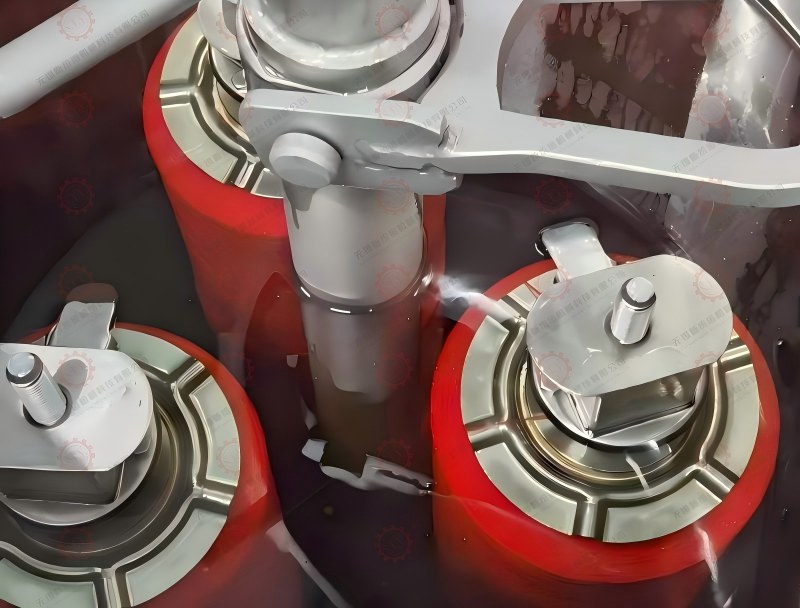
| Cause | Typical problem | Why it affects shade repeatability |
|---|---|---|
| Package weight variation | Different depth between bobbins or batches | The real dye-to-yarn ratio changes when each package does not carry the same yarn weight. |
| Winding density variation | Light and dark packages in one lot | Liquor resistance changes, so circulation flow and dye penetration also change. |
| Hole exposure or package collapse | Uneven dyeing and short-circuit flow | The liquor bypasses yarn mass instead of flowing evenly through the package. |
| Pretreatment inconsistency | Unstable hue, poor levelness, different absorbency | Residual impurities, peroxide, alkali, pH, and gloss differences change dye uptake. |
| Unstable heating and holding | Batch-to-batch shade variation | Dye exhaustion and fixation depend on temperature curve and holding time. |
| Incorrect feeding sequence or rate | Different fixation and different final shade | pH fluctuation and non-uniform additive distribution change the dyeing result. |
| Liquor flow imbalance in the machine | Inside-outside color difference | When flow and pressure are not stable, penetration through all packages becomes inconsistent. |
In immersion dyeing, the final apparent depth is closely related to the real ratio between dyestuff and yarn weight. If packages are loaded only by quantity, while the actual weight of each package is different, the real dyeing ratio is already inconsistent before the cycle starts.
This is why package weight should not be judged only by outside diameter or visual appearance. A practical approach is to weigh each soft package after winding and control the deviation within a tight range. If some packages are obviously heavier or lighter, shade difference between packages is very likely to appear.
Winding density is one of the most important factors in package yarn dyeing reproducibility. When package density is too high, liquor circulation resistance increases, penetration becomes more difficult, and dye uptake may become deeper or shallower depending on flow condition and process design.
When package density is too low, the structure may become unstable after wetting. In some cases, the yarn may collapse, deform, or allow liquor to pass through too easily. This causes short-circuit flow and makes the dyeing result uneven not only on that package, but also across the whole carrier loading.
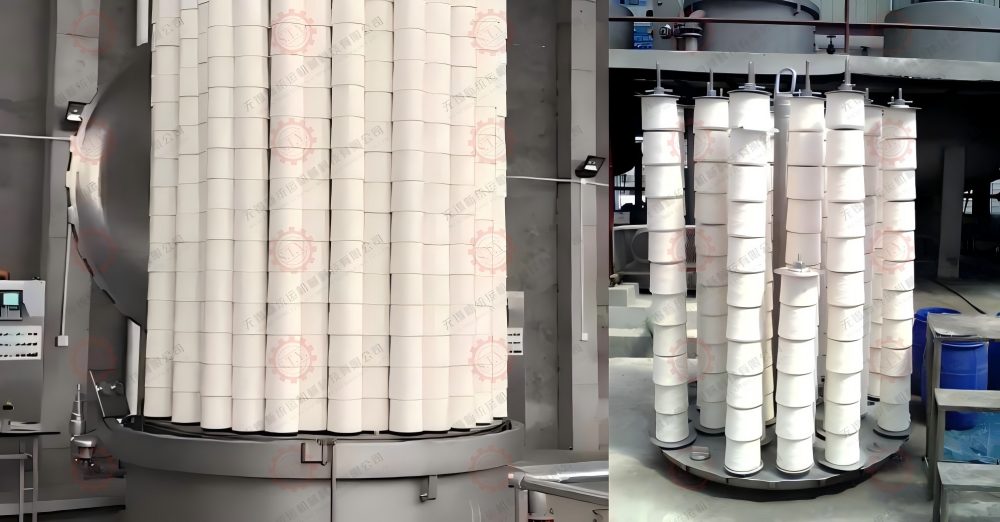
If winding is not properly built, or if the package becomes unstable after wetting, exposed channels may appear inside the package. Once this happens, dye liquor tends to take the path of least resistance instead of passing evenly through the yarn mass.
This kind of short-circuit flow is a typical cause of non-recurrence. It not only creates uneven dyeing on the affected package, but also changes the circulation condition of the surrounding packages on the same carrier.
Many dyehouses pay close attention to dyestuff weighing, but do not control pretreatment with the same discipline. In practice, differences in impurity removal, whiteness, residual peroxide, residual alkali, washing quality, or final pH can all lead to different dye affinity and final color yield.
This is especially important when pretreatment, dyeing, and post-treatment are all carried out in the same package yarn dyeing system. If the pretreatment effect is not stable from batch to batch, reproducibility problems may appear even when the same dye recipe is used again. For a more complete explanation of preparation steps and control points, you can also read Textile pretreatment before dyeing.
Even if the same dyes are selected, shade reproducibility will still be unstable when the dyeing process itself is not repeatable. Heating rate, target temperature, holding duration, and cooling path all affect exhaustion, penetration, fixation, and final appearance.
If one batch rises too fast, another batch holds too short, or the actual bath temperature differs from the programmed setting, the final dye uptake can change. This is why process repeatability matters just as much as recipe design.
In reactive dyeing, alkali addition method has a strong influence on fixation and hydrolysis. If alkali is added too quickly, too early, or in one shot, bath pH may fluctuate sharply. Once pH control becomes unstable, the final fixation result can change from one batch to another.
A more reliable approach is to keep feeding rhythm, feeding sequence, and pH control as stable as possible. The goal is not only to match the recipe on paper, but to match the real process condition during the full dyeing cycle.
When reproducibility becomes poor, many factories first suspect the dyestuff. In fact, machine-side factors should also be checked carefully. If liquor flow through the package is not stable, or if loading condition changes the circulation resistance too much, the same recipe may still produce different dyeing results.
In package yarn dyeing, reproducibility depends on whether liquor can pass through each package in a consistent way. If package building is inconsistent, or if flow distribution changes from batch to batch, inside-to-outside shade difference and lot-to-lot variation may appear. If you want to see how machine structure affects penetration, levelness, and reproducibility, this article can be linked here: How to choose the right dyeing machine for yarn and fabric.
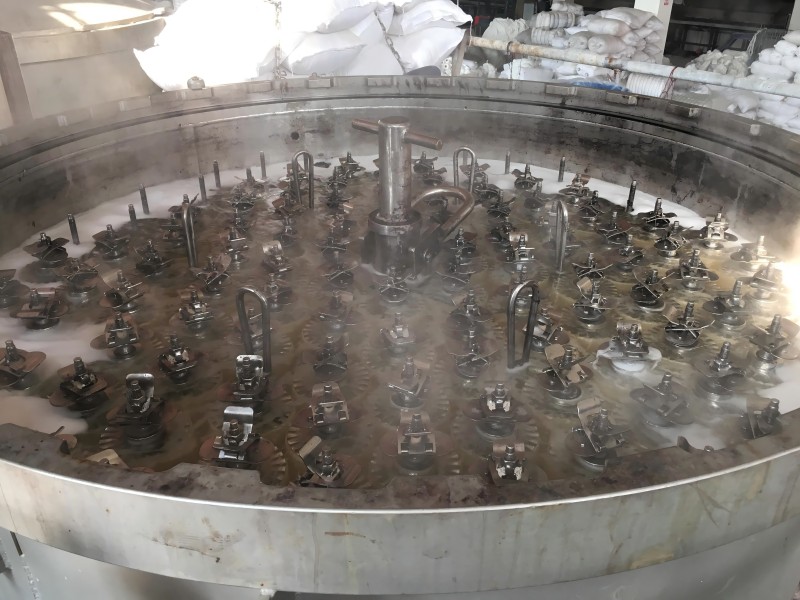
Package yarn dyeing non-recurrence is usually the result of multiple small inconsistencies rather than one single major mistake. Package weight, winding density, package stability, pretreatment quality, process control, additive feeding, and liquor circulation all need to be kept consistent if stable reproducibility is the goal.
For dyehouses that want better repeatability, the right approach is to standardize both process management and machine-side operating conditions, instead of adjusting the dye recipe alone after every shade difference. Readers who are evaluating related equipment can continue to the cone and package yarn dyeing machine page for related machine information.
Because the actual dyeing condition may not be the same. Package weight, winding density, pretreatment effect, liquor flow, pH control, and heating curve can all change the final dye uptake.
Winding density changes circulation resistance. If the package is too tight or too loose, liquor penetration becomes inconsistent and shade variation becomes more likely.
Yes. Residual impurities, peroxide, alkali, and unstable final pH can all change dye affinity and reduce reproducibility.
Not necessarily. In many cases, winding quality, pretreatment consistency, loading condition, and liquor circulation should be checked first.

