
Efficient operation of an overflow jet fabric dyeing machine is not only about increasing nozzle pressure or running the fabric faster. In real dyeing production, stable results come from the balance between fabric movement, liquor circulation, nozzle selection, temperature control and standardized process execution.
When these factors are not matched correctly, the machine may still run, but the fabric can easily show creases, rope marks, uneven shade, excessive elongation or unstable circulation. This guide explains how to operate an overflow jet fabric dyeing machine more efficiently from a practical production point of view.
An overflow jet fabric dyeing machine is a rope-form fabric dyeing system where the fabric circulates continuously inside the dyeing tube. The fabric is moved by a combination of dye liquor flow, nozzle jet force and mechanical assistance from the lifting wheel.
Compared with traditional high-tension fabric handling, overflow jet dyeing is widely used for knitted fabrics, synthetic fabrics and stretch-sensitive materials because the fabric can move with relatively lower tension when the nozzle, flow and fabric speed are properly controlled.
However, the machine itself does not guarantee good dyeing results. The key is whether the machine structure and operating parameters are suitable for the actual fabric.
If you are comparing different structures for knitted, woven or synthetic fabrics, you can also review our fabric dyeing machine series to understand available machine configurations for different production needs.
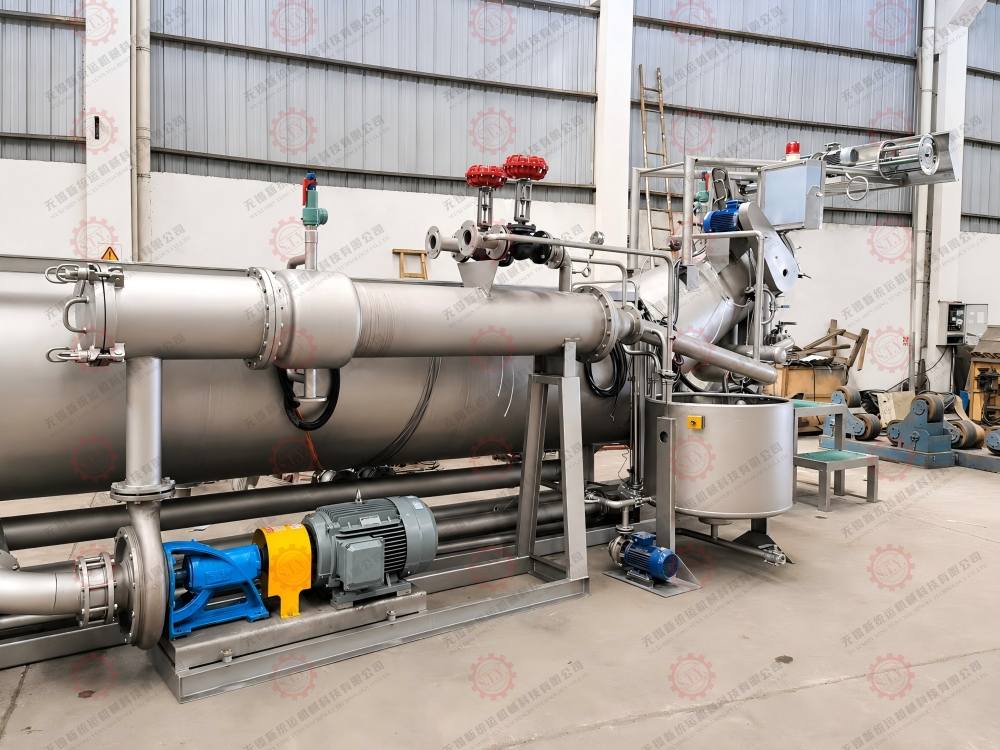
Overflow jet dyeing machines are commonly used for a wide range of knitted and woven fabrics, but not every fabric should be operated with the same pressure, speed or nozzle size. Before setting the machine, operators should first judge the fabric behavior in wet rope form.
| Fabric Type | Operation Focus | Main Risk |
|---|---|---|
| Lightweight knitted fabrics | Lower tension, smooth circulation, gentle nozzle pressure | Creasing, rope marks, fabric distortion |
| Elastic knitted fabrics | Controlled fabric traction and moderate running speed | Elongation, width change, shape instability |
| Polyester and synthetic fabrics | Stable high-temperature circulation and even liquor penetration | Shade difference, thermal creasing, poor levelness |
| Medium-weight woven fabrics | Correct nozzle diameter and enough liquor carrying force | Fabric accumulation, uneven movement, fold marks |
| Heavy terry or thick fabrics | Larger nozzle opening, stronger circulation and careful loading | Poor circulation, fabric blockage, uneven dyeing |
For knitted and elastic fabrics where tension control is especially important, you may also read our guide on low tension and uniform dyeing solutions for knitted fabric. It explains why fabric structure, circulation stability and machine design should be considered together.
Many dyeing problems start before the heating or dyeing stage. Operators should not set the machine only according to a fixed recipe. The following information should be checked before loading the fabric:
If these points are not confirmed, the same machine may perform well on one fabric but create defects on another fabric.
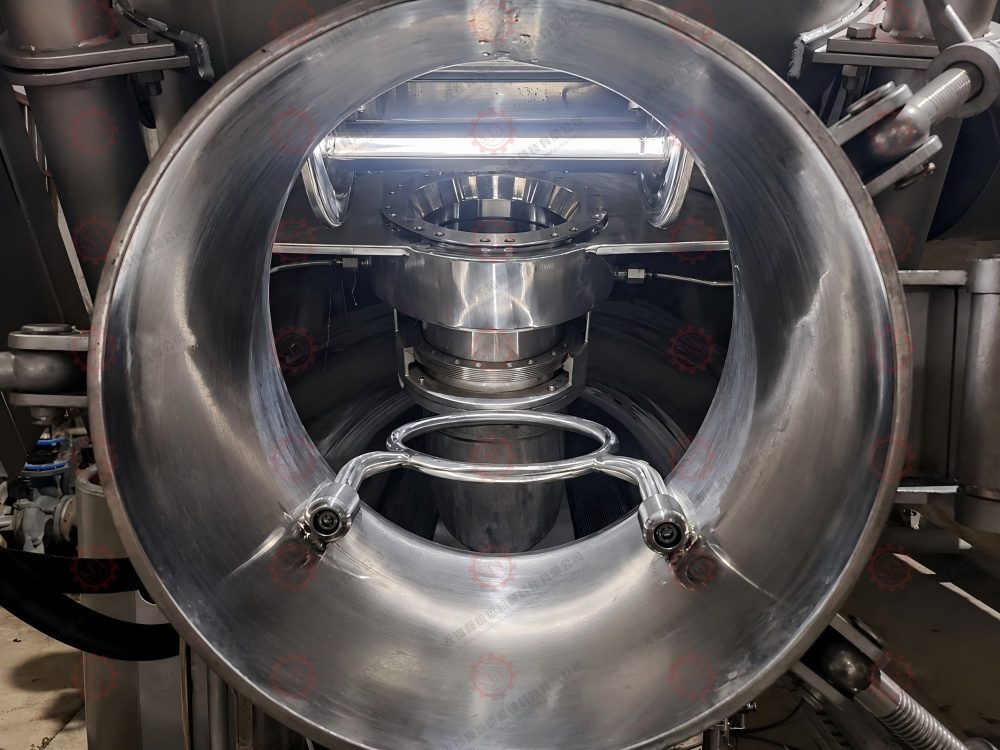
The nozzle is one of the most important parts of an overflow jet fabric dyeing machine. It converts pump pressure into directional liquor flow and helps drive the fabric through the dyeing tube.
The nozzle diameter should be selected according to the fabric’s wet rope diameter, fabric thickness and running behavior. A nozzle that is too small will compress the fabric and increase the risk of creases or rope marks. A nozzle that is too large may reduce driving force and cause unstable fabric movement.
| Fabric Condition | Nozzle Selection Logic | Possible Problem if Incorrect |
|---|---|---|
| Light and soft fabric | Use gentle liquor force and avoid excessive compression | Creases, rope marks, fabric surface damage |
| Medium-weight fabric | Balance fabric passage space and liquor driving force | Unstable circulation or uneven dyeing |
| Heavy or thick fabric | Use larger passage space and sufficient circulation capacity | Fabric blockage, poor movement, internal shade difference |
For a deeper explanation of machine structure, nozzle system and fabric running logic, see our article on the long tube overflow jet fabric dyeing machine. This helps buyers understand why nozzle size, liquor flow and fabric path design directly affect dyeing stability.
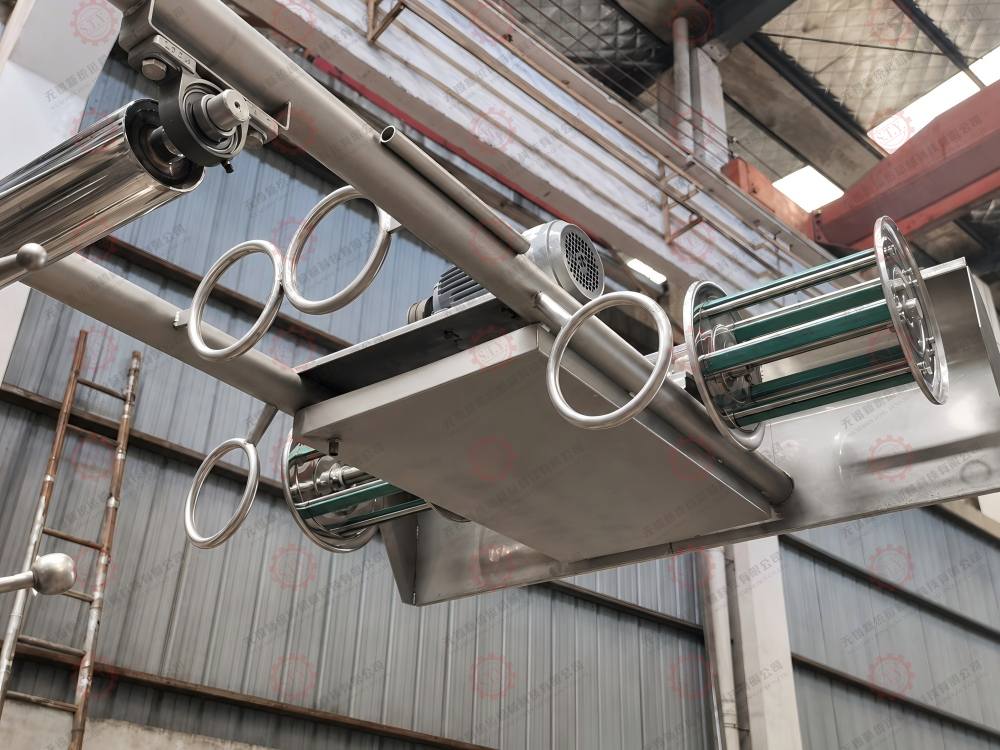
Efficient overflow jet dyeing depends on the balance between liquid traction and mechanical traction. The nozzle provides liquor force, while the lifting wheel helps guide and support fabric circulation. Neither one should dominate the fabric movement.
If the nozzle pressure is too strong, the fabric may be forced through the system too aggressively. If the lifting wheel speed is too high, the fabric may be stretched. If both are too weak, the fabric may pile up inside the tube and form creases.
| Operating Condition | Possible Result | Adjustment Direction |
|---|---|---|
| Nozzle pressure too high | Fabric impact, rope marks, surface stress | Reduce pressure and check whether the nozzle is too small |
| Nozzle pressure too low | Weak circulation and uneven liquor exchange | Increase liquor flow or check pump/nozzle matching |
| Lifting wheel speed too high | Fabric stretching, deformation or width instability | Reduce wheel speed and observe fabric tension |
| Lifting wheel speed too low | Fabric accumulation and crease formation | Increase speed gradually and keep fabric moving smoothly |
The ideal condition is that the fabric moves smoothly, without visible pulling, accumulation, shaking or blockage. Operators should observe the fabric movement during circulation instead of relying only on the control panel values.
This balance is especially important when dyeing knitted fabrics. If you want to understand how machine operation affects fabric tension, creasing and shade uniformity, you can also refer to our knitted fabric dyeing machine application page.
Fabric feeding should start at a low speed. The purpose is not to finish loading quickly, but to allow the fabric rope to enter the tube smoothly with stable tension. For fabrics that are easy to crease or stretch, rough loading can create defects before the dyeing process officially starts.
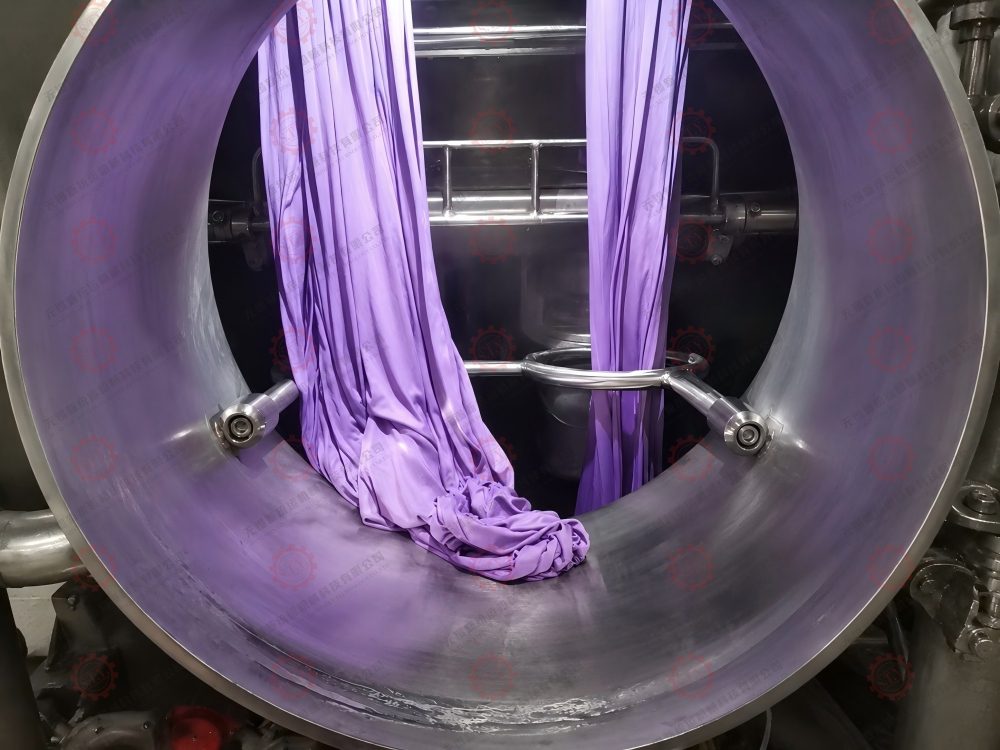
After loading, the machine should run at low speed for a short period to confirm that the fabric can circulate smoothly. Operators should check whether the fabric is blocked, twisted, accumulated or moving with excessive tension.
For sensitive fabrics, this circulation confirmation step is very important. Heating or chemical dosing should not begin until the fabric movement is stable.
Heating should be gradual and matched with fabric circulation. Rapid heating may increase the risk of thermal creasing, especially for synthetic fabrics or fabrics with unstable structure.
During heating, operators should monitor circulation, nozzle pressure, fabric speed and temperature rise. The machine should maintain even liquor exchange throughout the batch.
During the holding stage, stable circulation is more important than simply keeping the temperature. If the fabric circulation becomes unstable during this period, shade unevenness may occur even if the recipe and temperature are correct.
Operators should check whether the fabric movement remains consistent, whether foam or fabric accumulation appears, and whether the nozzle pressure changes abnormally.
Cooling should also be controlled. Fast cooling may increase fabric stress and create crease marks, especially for thicker or synthetic fabrics. Washing should maintain enough liquor circulation to remove unfixed dye and chemicals evenly.
After unloading, operators should check shade consistency, crease marks, rope marks, fabric width, surface condition and hand feel. These results help determine whether the machine settings should be adjusted for the next batch.
The following values are only for general reference. They should not be used as fixed settings for every machine or every fabric.
| Fabric / Process Condition | Nozzle Pressure Reference | Temperature Reference | Operation Focus |
|---|---|---|---|
| Lightweight synthetic fabric | Approx. 0.3–0.6 bar | According to dyeing process, often high-temperature for polyester | Prevent creases and avoid excessive jet impact |
| Medium-weight knitted fabric | Approx. 0.6–1.0 bar | Depends on fiber type and dye class | Balance circulation and low-tension movement |
| Heavy or thick fabric | Approx. 1.0–1.5 bar | Depends on material and process | Ensure enough liquor carrying force and avoid fabric blockage |
| Cotton or reactive dyeing process | Adjusted by fabric structure and circulation condition | Usually lower than polyester high-temperature dyeing | Control chemical dosing, circulation and washing effect |
| Common Mistake | Possible Defect | Correction Direction |
|---|---|---|
| Using too small a nozzle | Fabric compression, creases, rope marks | Check wet rope diameter and use suitable nozzle size |
| Nozzle pressure set too high | Surface stress, fabric impact marks, deformation | Reduce pressure and observe fabric movement |
| Fabric speed too high | Stretching, unstable fabric width, shape change | Lower lifting wheel speed and balance liquid traction |
| Overloading the machine | Poor circulation, uneven shade, fabric blockage | Follow suitable batch capacity and loading ratio |
| Heating or cooling too quickly | Thermal creasing or shade instability | Use controlled temperature ramping according to fabric sensitivity |
| Starting dye addition before circulation is stable | Uneven dye distribution and shade difference | Confirm smooth circulation before dosing |
If fabric creasing is your main production problem, you can also read our technical article on why fabric creases occur during dyeing. It explains how fabric tension, rope movement, temperature change and machine operation may contribute to crease formation.
First check whether the fabric is being compressed by the nozzle, whether the fabric circulation is too slow, whether the loading amount is too high, and whether heating or cooling is too fast. Creases are often related to fabric accumulation, poor rope movement or excessive mechanical stress.
Uneven shade may come from unstable circulation, poor liquor exchange, incorrect dosing sequence, foam, temperature fluctuation or fabric accumulation. Operators should not only check the dye recipe; they should also check whether every part of the fabric receives similar liquor contact during the process.
For knitted or elastic fabrics, elongation is often related to excessive mechanical traction or high running speed. The lifting wheel speed and nozzle force should be adjusted to reduce unnecessary pulling.
Rope marks may appear when the fabric is squeezed, twisted or repeatedly folded under pressure. Check nozzle size, fabric rope condition, tube movement and circulation balance.
Poor circulation may be caused by overloading, unsuitable nozzle size, insufficient pump flow, excessive fabric thickness or incorrect fabric speed. In this case, the problem should be judged from both machine configuration and fabric condition.
Good operation can reduce many dyeing risks, but operation alone cannot solve every problem. If the machine structure, pump flow, nozzle system, tube design and loading capacity are not suitable for the fabric, the operator will have limited adjustment space.
For example, a machine designed for lightweight knitted fabrics may not be the best choice for heavy terry fabric. A machine with insufficient circulation capacity may struggle with thick fabric even if the operator increases pressure. A machine with unsuitable nozzle design may create tension problems on stretch-sensitive fabrics.
This is why machine recommendation should start from the fabric and process, not only from machine capacity or price.
For knitted synthetic fabrics, elastic fabrics and home textile fabrics where low-tension handling is required, the TY-JL636 top-running L-type overflow fabric dyeing machine can be considered as one practical option. Its fabric guide system, overflow nozzle design and circulation structure are designed to support smoother fabric movement during dyeing.
For medium-weight woven fabrics requiring high-temperature processing and stable long-tube circulation, the TY-JL631 down-running overflow jet fabric dyeing machine can be considered according to fabric GSM, width, material and required batch capacity.
Before recommending an overflow jet fabric dyeing machine, a responsible supplier should understand the real production requirement first. The following information helps avoid wrong machine selection:
If you are still comparing different machine types for yarn or fabric dyeing, this broader guide may help: how to choose the right dyeing machine for different yarn and fabric. It explains how material form, fiber type, batch capacity, temperature, pressure and process requirements affect machine selection.
At Wuxi Shin Tong Yunn Machinery Technology Co., Ltd., we first understand the customer’s fabric, batch capacity and dyeing process, then recommend the suitable fabric dyeing machine configuration. This helps reduce the risk of buying a machine that looks suitable in capacity but does not match the actual dyeing requirement.
Many overflow jet fabric dyeing machines can work with relatively low liquor ratios, often around 1:6 to 1:8 depending on machine design and fabric condition. However, liquor ratio should not be judged as an isolated number. It must be considered together with circulation design, pump flow, nozzle structure, loading condition and actual fabric type.
Overflow jet dyeing is commonly suitable for knitted fabrics, synthetic fabrics, lightweight to medium-weight fabrics and many stretch-sensitive materials. For heavy or special fabrics, machine structure and nozzle configuration should be checked carefully before selection.
Not always. Higher pressure may improve fabric movement in some cases, but excessive pressure can also create fabric impact, rope marks or deformation. The correct setting depends on fabric behavior, nozzle size, pump flow and lifting wheel speed.
Creasing can result from unsuitable nozzle size, poor circulation, excessive loading, fast heating or cooling, fabric accumulation, or incorrect balance between liquid traction and mechanical traction. The cause should be checked from both the machine setting and the fabric condition.
A buyer should not choose only by capacity or price. Fabric type, GSM, width, dyeing temperature, required liquor ratio, pump flow, nozzle system, automation level and production purpose should all be considered before confirming the machine model.
The following pages may help you better understand fabric dyeing machine structure, fabric movement and machine selection.
Share your fabric type, GSM, width, batch capacity and target dyeing process. Our team can help check whether an overflow jet fabric dyeing machine is suitable and recommend a practical machine configuration.
Request Machine Recommendation
