
Velvet, fleece and brushed fabrics are widely used in garments, blankets, upholstery and home textiles. These fabrics often look similar from the surface, but their fiber composition, fabric weight, pile structure and elasticity can be very different.
For textile buyers and dyeing factories, knowing the basic differences between these fabrics can help avoid misunderstandings before dyeing. The fabric name alone is not enough. Before production, details such as composition, GSM, width and pile surface should also be confirmed.
This article introduces six common velvet and fleece fabric types, together with simple dyeing notes for reference.
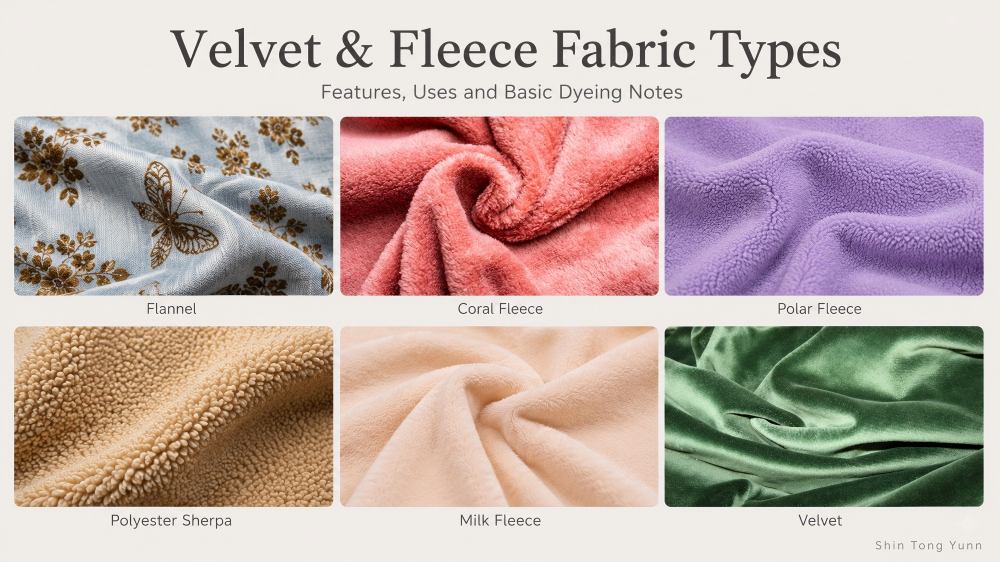
Flannel is a soft fabric with a short, dense and slightly fuzzy surface. It may be made from wool, cotton, polyester or blended fibers. Because of its warm and comfortable hand feel, flannel is often used for shirts, bedding, trousers, suits and winter garments.
When flannel is dyed or finished, the soft surface should be protected. Too much friction or strong mechanical action may affect the fabric appearance and hand feel.
Coral fleece is usually made from polyester fiber. It has a soft, fluffy and warm pile surface, and is commonly used for bathrobes, baby products, blankets, towels and home textile items.
For coral fleece, the pile surface and fabric bulkiness should be considered before dyeing. Stable fabric movement and gentle handling are helpful for keeping a more uniform surface effect.
Polar fleece is generally made from polyester, while some types may contain spandex or other blended fibers. It has a fluffy loop or brushed surface and is often used for hoodies, jackets, loungewear, blankets and outdoor clothing.
Before dyeing polar fleece, fabric GSM, elasticity and surface condition should be checked. If the fabric is too tight during wet processing, crease marks or uneven surface effects may appear more easily.
Polyester sherpa has a thick, lamb-wool-like fluffy surface. It is often used for jackets, linings, hats, toys, cushions and winter home textile products.
Sherpa fabric is usually thicker than ordinary knitted fabric. Before dyeing, it is important to understand its thickness, pile density and fabric weight, because these details may affect loading and fabric movement.
Milk fleece is usually a soft fabric made from milk protein fiber or blended yarns. It has a smooth and comfortable hand feel, so it is often used for underwear, bedding and skin-friendly textile products.
For this type of soft fabric, the final hand feel is usually important. Dyeing and finishing should avoid unnecessary surface damage or harsh processing conditions.
Velvet may be made from silk, rayon, polyester, cotton or blended yarns. It has a dense pile surface and a soft, glossy appearance. It is widely used for garments, curtains, sofas, upholstery and decorative home textile products.
Because velvet has a visible pile surface, it should be handled carefully during dyeing and finishing. Pile marks, crease marks or uneven appearance may occur if the fabric surface is compressed or rubbed too strongly.
| Fabric Type | Common Material | Surface Feature | Common Uses | Basic Dyeing Note |
|---|---|---|---|---|
| Flannel | Wool, cotton, polyester or blends | Short, dense and soft nap | Shirts, bedding, suits, trousers | Avoid excessive rubbing |
| Coral Fleece | Polyester | Soft, fluffy and warm pile | Robes, blankets, towels, baby products | Pay attention to pile surface |
| Polar Fleece | Polyester or polyester blends | Fluffy loop or brushed surface | Hoodies, jackets, outdoor wear | Confirm GSM and elasticity |
| Polyester Sherpa | Polyester or blended fibers | Thick lamb-wool-like pile | Outerwear, linings, cushions, toys | Check thickness and pile density |
| Milk Fleece | Milk protein fiber or blends | Smooth and soft hand feel | Underwear, bedding, home textiles | Protect softness and comfort |
| Velvet | Silk, rayon, polyester, cotton or blends | Dense pile with glossy surface | Garments, curtains, sofas, upholstery | Avoid pile marks and pressure marks |
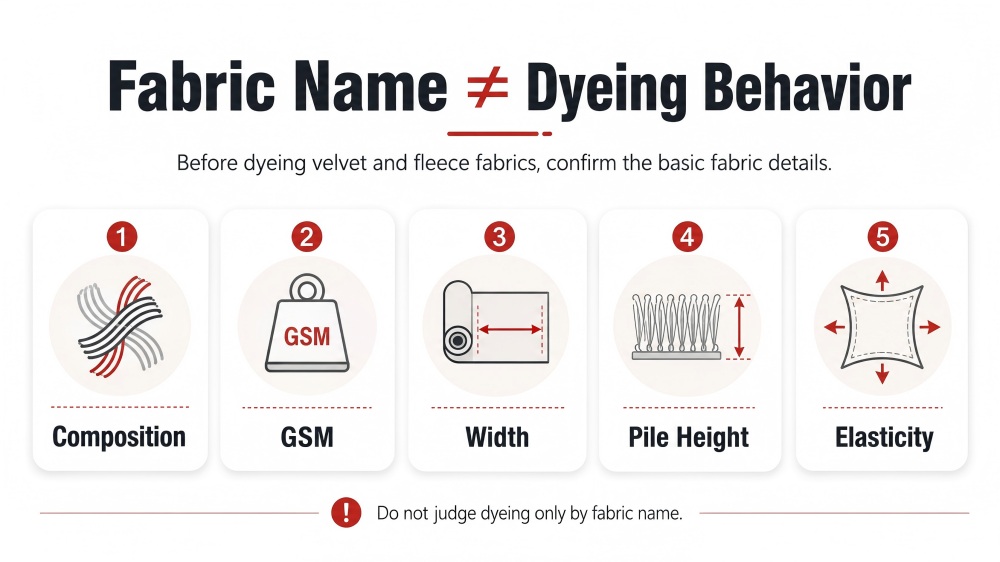
In many cases, two fabrics may both be called fleece or velvet, but their actual dyeing behavior can be different. Before arranging dyeing production, the following basic fabric details should be confirmed:
Velvet and fleece fabrics usually have a raised, brushed or fluffy surface. During dyeing, the fabric surface should be handled more carefully than ordinary flat fabrics. Strong friction, unsuitable loading or excessive fabric tension may affect the final surface appearance.
For this reason, dyeing factories often need to pay attention to fabric circulation, fabric loading condition and surface protection. These are basic points to consider before moving to a more detailed fabric dyeing machine application discussion.

If your production involves velvet, polar fleece, coral fleece, sherpa or brushed polyester fabrics, the fabric type, GSM, width and dyeing temperature should be reviewed before choosing a dyeing machine.
You may read our fabric dyeing machine application page to understand how different fabric applications may require different dyeing machine considerations.
For some knitted velvet, polar fleece, coral fleece and brushed polyester fabrics, a TY-JL636 top-running L-type overflow fabric dyeing machine may be reviewed according to fabric GSM, width, dyeing temperature and actual production requirement.
Read Fabric Dyeing ApplicationThe same fabric name may refer to different compositions, weights and surface structures.
Pile height, pile density and brushed surface condition may affect dyeing and finishing results.
Composition, GSM, width, elasticity and dyeing temperature should be checked before production.
Velvet and fleece fabrics are not only different in appearance. Their fiber composition, fabric weight, pile structure and elasticity may all influence dyeing preparation.
Before confirming a dyeing process or machine direction, it is better to start from the fabric itself. A clear understanding of the fabric can help reduce unnecessary trial and error in later dyeing production.

